How districts can connect graduation readiness, work-based learning, and school accountability
Indiana’s new A-F accountability model changes what counts when the state measures high school performance. Test scores and graduation rates still matter, but they are no longer the whole picture. Career readiness experiences, credentials, coursework, attendance, and other measures of student preparation now contribute to the calculation as well.
For district leaders, that creates an important connection between graduation planning and accountability. Some of the experiences schools are already building to help students meet Indiana’s new diploma and readiness expectations can also contribute to the way high schools are evaluated, and work-based learning is one of the examples.
Under Indiana’s Grade 12 accountability model, a student who completes 150 hours of qualifying work-based learning across no more than three qualifying experiences can earn a Work-Based Learning Student Success Indicator when those hours are reported appropriately through InTERS. That indicator becomes part of the student-level calculation that contributes to the school’s overall accountability performance.
For schools trying to expand WBL while managing new graduation requirements, that makes access and implementation increasingly important.
Indiana is measuring more than academic performance
Indiana began using its new accountability framework with the 2025-26 school year, with the first A-F grades under the model scheduled to be issued in late 2026. The framework is built around Indiana’s Graduates Prepared to Succeed, or GPS, priorities and measures both academic mastery and a broader set of Student Success Indicators.
At the Grade 12 level, Indiana looks at a student’s diploma outcome along with additional indicators that demonstrate preparation for college, career, and life after high school.
Those Student Success Indicators include qualifying work-based learning, an approved Credential of Value, qualifying college and career coursework, regular attendance, Biology and U.S. Government proficiency, ACT or CLT benchmarks, and English-language proficiency. Students do not have to complete every indicator. Completing additional qualifying indicators can increase the points a student contributes within the Grade 12 accountability calculation.
This creates a stronger connection between the experiences students have before graduation and the way schools demonstrate success.
Work-based learning can serve more than one district priority
Indiana districts already have significant reasons to expand high-quality work-based learning. Students need opportunities to apply what they are learning, develop professional skills, explore careers, and meet readiness requirements connected to graduation.
The accountability model adds another reason to think strategically about WBL.
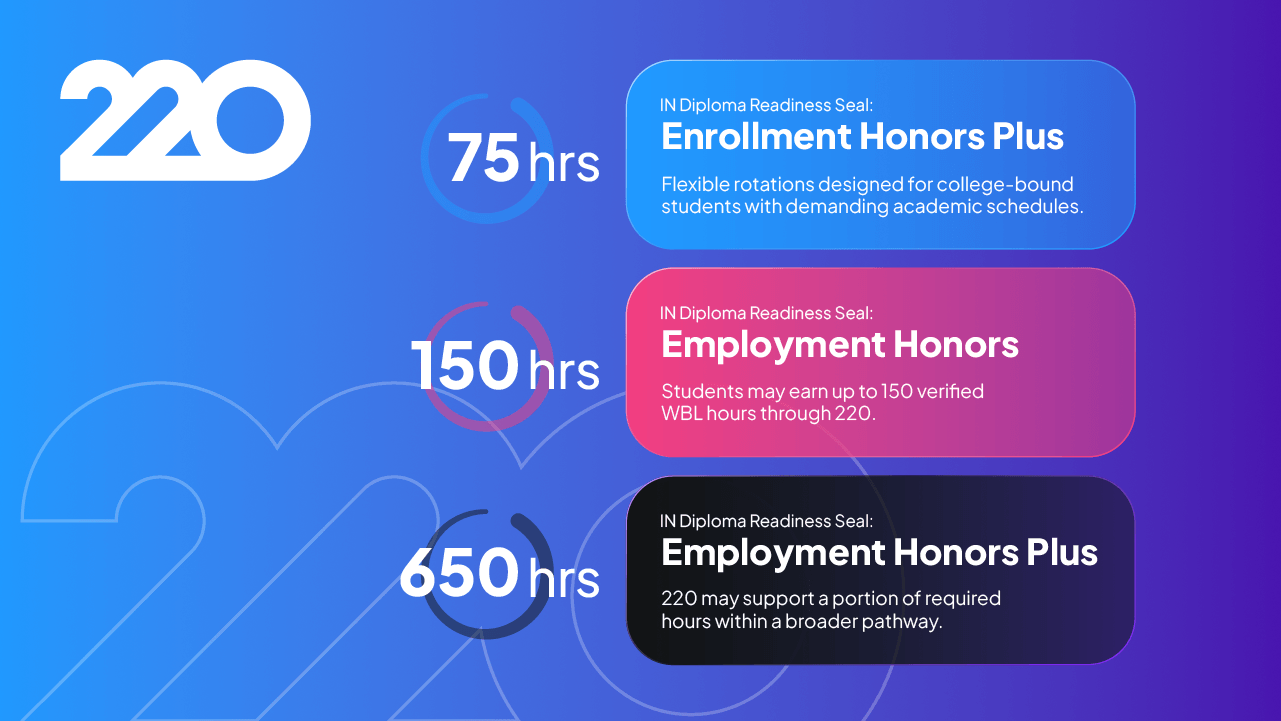
A qualifying 150-hour WBL experience can earn a student the Work-Based Learning Student Success Indicator. Depending on the student’s pathway, those same hours may also help support requirements associated with a diploma readiness seal.
The accountability system and diploma system remain separate. A readiness seal has its own requirements, while the accountability model assigns points based on the student’s diploma or seal and the Student Success Indicators the student completes. But the systems can overlap in useful ways.
That means one well-designed WBL strategy can support multiple goals instead of forcing schools to build a separate initiative for every new requirement.
That makes access to WBL an accountability issue, too
The challenge for many districts is not understanding the value of work-based learning. It is providing enough quality experiences for the number of students who need them.
Traditional employer placements will continue to be an important part of the WBL landscape, but they can be difficult to scale. Schools have to account for employer availability, student age requirements, transportation, scheduling, staff coordination, documentation, and whether local opportunities match students’ interests.
Those challenges can become especially pronounced in rural communities or in regions where multiple schools are competing for a limited number of placements.
Under the new accountability model, limited WBL capacity can have implications beyond a student missing an internship opportunity. If qualifying WBL is one of the Student Success Indicators districts want more students to achieve, schools need a practical way to make those experiences available at scale.
Where 220 Youth Leadership fits
220 Youth Leadership helps Indiana schools expand access to work-based learning without depending entirely on individual local employer placements.
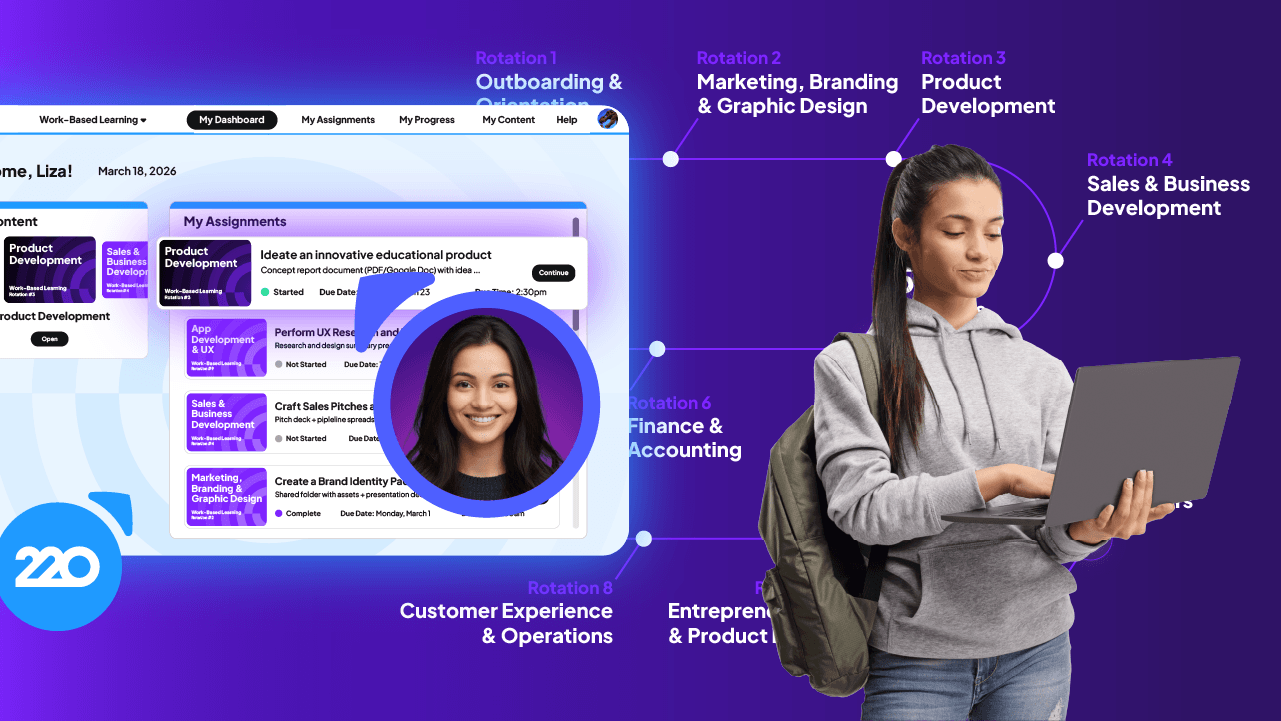
Through 220’s remote work-based learning model, students complete workplace-style projects and rotate through business functions while working in a structured, remote environment. They develop deliverables, interact with professionals, receive feedback, document their experience, and build skills that translate to future employment.
For districts, the model is designed to reduce some of the logistical barriers that make traditional WBL difficult to scale. Schools do not have to find a separate employer placement for every participating student, arrange transportation to multiple worksites, or build the entire experience from scratch.
When a student completes 150 hours of qualifying WBL through eligible experiences and the hours are reported appropriately, those hours can help the student satisfy Indiana’s Work-Based Learning Student Success Indicator.
That creates the potential for the same experience to support a student’s career preparation, readiness-seal progress, WBL goals, and the school’s Grade 12 accountability performance.
Build one strategy around multiple requirements
Indiana’s graduation and accountability changes give districts several interconnected priorities to manage at once. Students need meaningful career preparation. Schools need scalable ways to provide qualifying experiences. Administrators need those experiences documented correctly. And district leaders need to understand how the work they are already doing connects across graduation, readiness, and accountability.
220 Youth Leadership works with Indiana schools to provide structured work-based learning that expands student access while reducing the burden of finding and coordinating individual placements. For districts working through Indiana’s new graduation and accountability expectations, that can mean fewer disconnected solutions and a clearer path for helping more students complete experiences that matter.
Want to see how 220 can fit into your district’s WBL and graduation strategy? Talk with our team about building a scalable pathway for your students.